The most important music industry news from May 10 to May 15, 2026, was not one single launch or lawsuit. It was the way several stories pointed in the same direction: AI music is becoming part of the working music business, while labels, platforms, creators, and listeners are still negotiating the rules of trust.
The week’s creator-side conversation was shaped by Google and Believe’s newly announced Flow Music partnership, Universal Music Group’s continuing push against AI dilution and streaming “leakage,” and fresh debate over whether AI music labels help listeners or change how they experience a song. For independent musicians and AI music users, the takeaway is practical: AI can speed up writing, production, and promotion, but the industry is moving toward clearer attribution, cleaner rights, and more scrutiny around synthetic scale.
Last Week Music Industry News: AI Moved From Experiment to Infrastructure
AI music is no longer just a side story about novelty tracks. In last week music industry news, AI showed up as a label strategy, a platform feature, a copyright risk, a listener-trust question, and a creator workflow.
That matters because the music business is splitting AI into two categories. The first is artist-supportive AI: tools for writing, demoing, arrangement, localization, marketing, video, and fan engagement. The second is extractive or confusing AI: unauthorized training, voice cloning, fake artist pages, low-effort streaming uploads, and fraud designed to pull money from royalty pools.
Creators should watch that split closely. If the industry accepts AI tools that assist artists while rejecting AI uses that impersonate or dilute them, the next phase of music creation will depend less on whether AI is used and more on how transparently, legally, and creatively it is used.
Believe and Google Flow Music Kept the Creator AI Conversation Moving
One of the biggest AI music stories entering the May 10-15 week was Google’s May 6 announcement that it is partnering with Believe to bring Google Flow Music and Lyria 3 Pro to artists. Music Business Worldwide reported that Believe will offer the Google Labs tool to artists, producers, and songwriters across Believe and TuneCore.
The positioning is important. Flow Music is being framed as a “creative collaborator” that can help with lyrics, melodies, genre exploration, and new instruments. Google also says it does not claim ownership of original content generated with Flow Music, while stating that Lyria 3 Pro is built using materials YouTube and Google have a right to use under their terms, agreements, and applicable law.
For artists, the partnership shows how AI music tools are moving closer to formal distribution and label-service ecosystems. For indie musicians, that could mean faster sketching, easier demo iteration, and more ways to test a concept before paying for full production. For labels and distributors, it also raises a sharper workflow question: how do you encourage useful AI creation while blocking unlicensed imitation and low-value content floods?
UMG’s AI Dilution Argument Is Really About Streaming Value
Universal Music Group’s response to AI dilution and streaming leakage is part of a wider argument about how streaming should reward music in 2026. In UMG’s current investor framing, the company connects its Artist-Centric and Streaming 2.0 work to better recognition for real artists, protection against fraud and misattribution, and differentiation from what it describes as a flood of noise on digital platforms.
The practical concern is simple. If streaming platforms are filled with AI-generated, misattributed, or fraudulent tracks, then legitimate artists may compete against content that is cheaper to produce, easier to scale, and sometimes designed to imitate real performers. That can affect attention, royalty allocation, playlist quality, and listener confidence.
UMG has also been careful to separate AI opportunity from AI abuse. The company has pointed to responsible AI partnerships and new fan experiences, while pressing for guardrails around unauthorized GenAI content and fraud. In plain terms, the major-label position is not “no AI.” It is closer to “licensed, attributed, artist-centered AI.”
For creators, this is a preview of the standards likely to matter more over time: avoid cloning identifiable artists without rights, keep documentation of your creative process, use AI as a tool rather than a disguise, and be ready for platforms to ask more questions about origin and attribution.
AI Music Labeling Became a Listener Trust Story
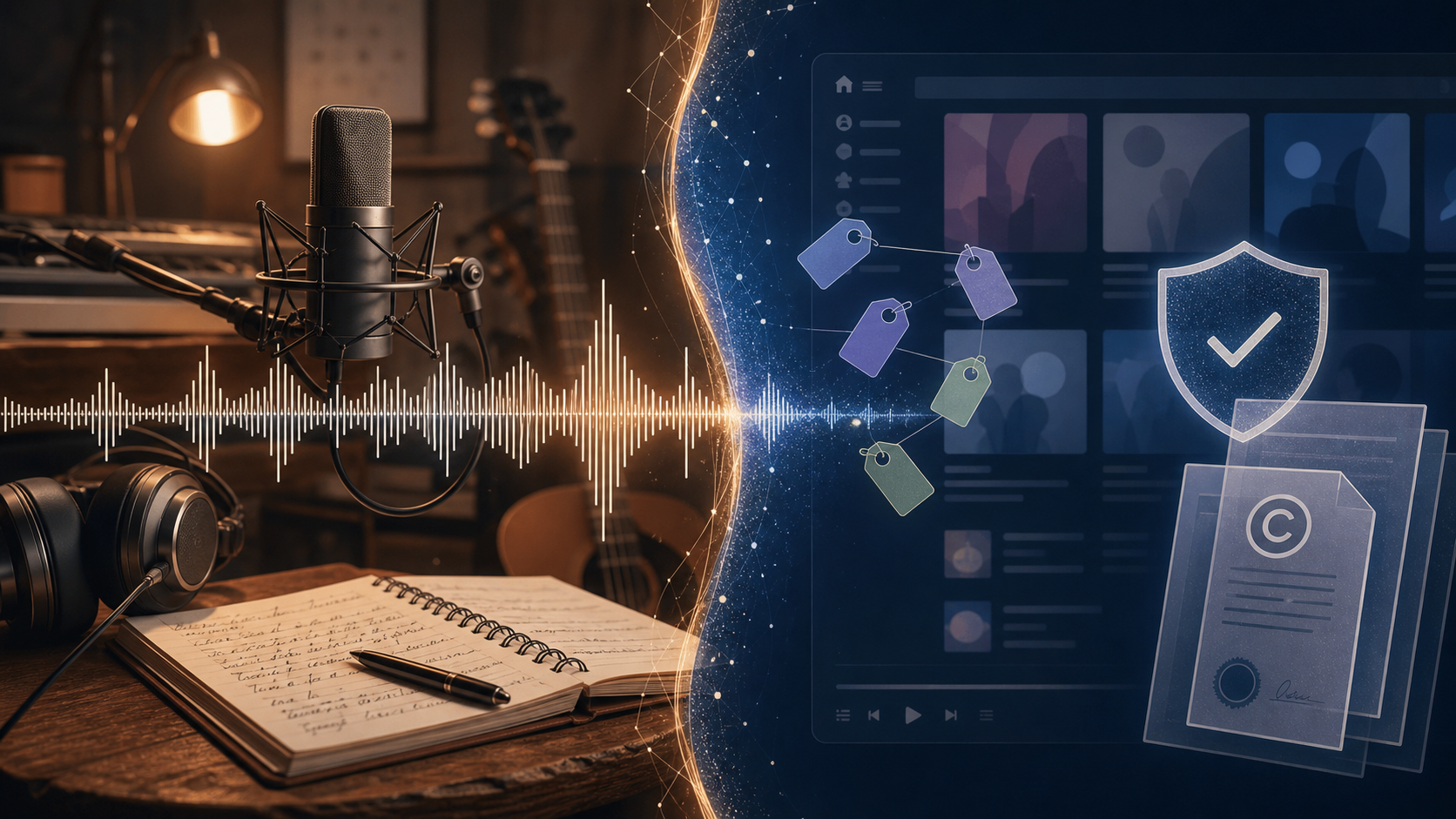
The week’s most useful trust story came from a May 13 Music Business Worldwide report on an academic study about AI labels. The study found that listeners engaged less deeply with music labeled as AI, even when the underlying music was human-composed.
That finding lands in a complicated place. On one hand, transparency is necessary. Listeners, artists, platforms, and rights holders need accurate information about whether AI played a role in a track. On the other hand, labels can affect perception. A song marked as AI may be heard differently before the listener gives it a fair chance.
The same MBW report also noted recent industry moves around AI labeling and authenticity, including Apple Music’s Transparency Tags, Spotify’s AI Credits beta and verification changes, and Deezer’s platform-level detection and tagging efforts. Deezer has reported that roughly 75,000 fully AI-generated tracks are uploaded to its service daily, representing about 44% of daily deliveries.
The lesson for AI music users is not to hide AI use. It is to make the human story around the track stronger. Explain the idea, the writing choices, the mood, the artist direction, and the purpose of the song. Attribution alone will not build trust; context will.
Fraud, Copyright, and “Who Made This?” Are Now the Same Debate
AI music fraud is becoming harder to separate from copyright and listener-trust debates. If an AI system imitates a known artist, a fake uploader places songs on an artist profile, or a distributor pushes synthetic tracks into streaming systems at scale, the damage is not only legal. It also affects audience trust and creator income.
Music Business Worldwide’s May 13 coverage cited Sony Music’s disclosure at the IFPI Global Music Report 2026 launch that it had asked streaming platforms to remove more than 135,000 songs created by fraudsters using generative AI to impersonate its artists. It also referenced industry concerns that generative AI has industrialized streaming fraud.
That context explains why platforms are adding labels, credits, verification rules, and detection systems. These moves may feel bureaucratic to creators, but they are also a response to a real marketplace problem: listeners need to know whether a recording is connected to the artist it appears to represent.
For indie musicians, the safest path is to keep release metadata clean, avoid soundalike prompts that depend on a specific living artist, and use original names, artwork, and branding. For labels, the priority is rights protection and catalog integrity. For AI music platforms, the pressure is to support creativity without becoming a shortcut for impersonation.
What This Means for Creators and Indie Musicians
The latest music business news for creators points to a more disciplined AI workflow. AI can help you move faster, but speed is no longer the only advantage. The stronger advantage is using AI to test ideas while keeping the artist identity clear.
Creators can respond in five practical ways:
- Use AI to develop drafts, not to erase authorship.
- Keep track of prompts, lyrics, references, and edits.
- Avoid prompts that request another artist’s voice, style, or identity too directly.
- Build a release story around the song’s theme, not around the novelty of AI.
- Review the final track for quality, originality, and possible AI-sounding artifacts before publishing.
For labels and artist teams, the same logic applies at a larger scale. AI can support demos, international versions, social edits, music videos, and promotional variations. But the more public the output becomes, the more important rights, disclosure, and quality control become.
Turn the Weekly Music Industry News Into Songs With MusicMaker AI
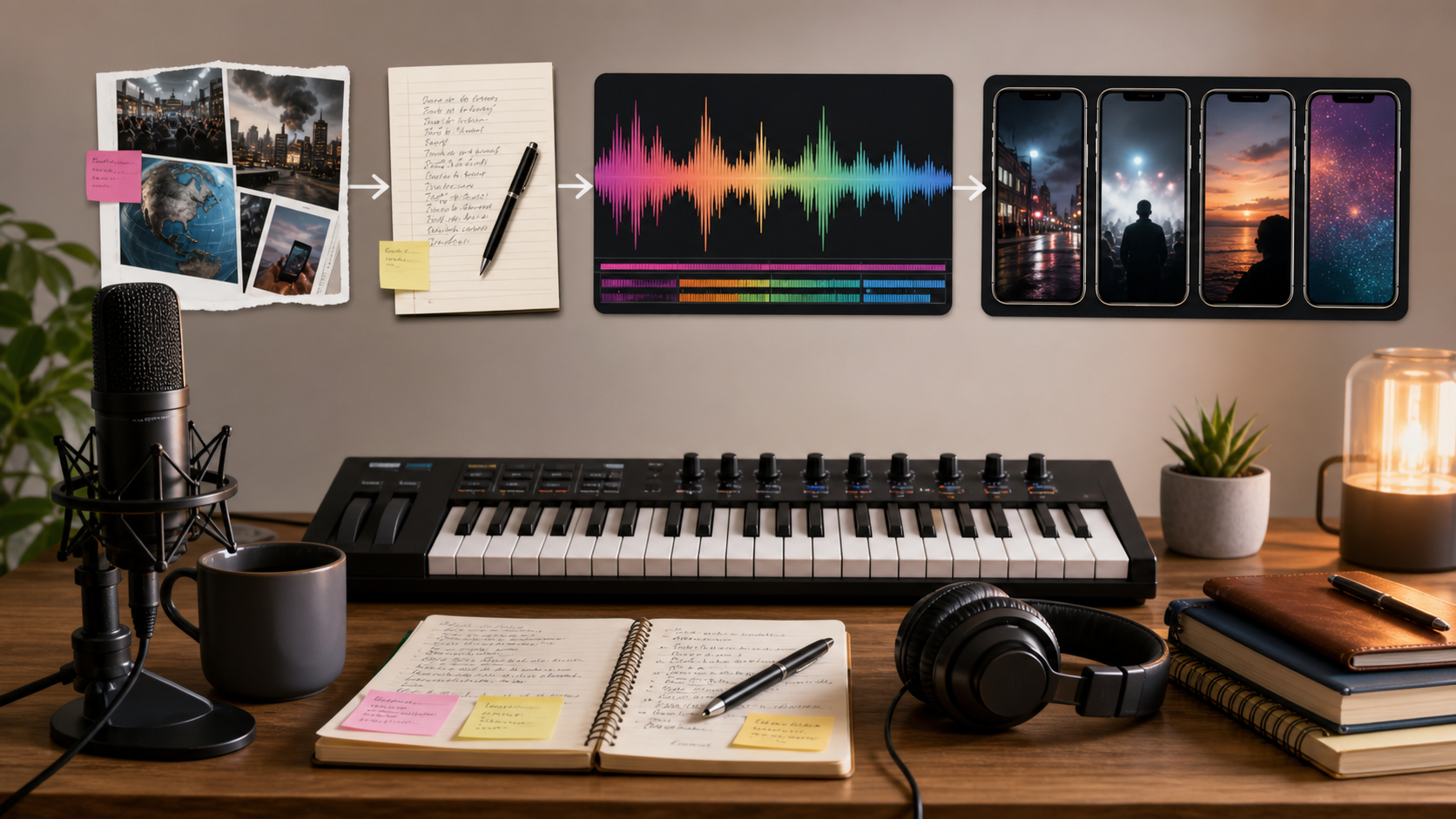
If you want to turn this weekly music industry news roundup into action, MusicMaker AI gives creators a practical way to move from trend to finished creative asset.
Use the AI Song Generator when you want to create a full track from a prompt. For example, a creator could turn the theme “human creativity in the AI era” into an indie pop song, a cinematic electronic track, or a spoken-word intro for a social campaign. This is useful for indie musicians testing hooks, creators building short-form soundtracks, and teams that need quick variations around a concept.
Use the AI Lyrics Generator when the idea is clear but the words are not. A songwriter could enter a theme such as “a singer protecting their voice in a synthetic world” and use the output as a first draft, then revise lines for personality and emotional specificity.
Use Lyrics to Song when you already have written lyrics and want to hear them as a finished musical idea. This is especially helpful after writing from a news prompt, because hearing the lyrics with melody and arrangement can reveal which lines feel natural and which lines need editing.
For promotion, use the AI Music Video Generator to turn songs into short music videos for social media. In a week when AI labeling and trust are central topics, visuals can help communicate the human intent behind a song. A lyric video, performance-style concept, or narrative short can make the track feel more grounded.
Before publishing, the AI Music Checker can help review whether a track may sound AI-generated. A checker is not a legal judgment or platform guarantee, but it can be a useful quality-control step when creators want to understand how a song might be perceived in an environment where AI music labeling is becoming more visible.
A Simple Creator Workflow for This Week’s Trends
Here is a practical workflow for turning the May 10-15 music industry news into creative output:
- Choose one news angle: AI trust, artist identity, streaming dilution, creator tools, or human-made music in an automated world.
- Draft a title and chorus idea with the AI Lyrics Generator.
- Turn the strongest lyric draft into a full song with Lyrics to Song or the AI Song Generator.
- Create two versions: one direct and creator-led, one more cinematic or abstract.
- Run a listening pass for originality, vocal believability, and emotional clarity.
- Use the AI Music Video Generator to make a short visual version for social platforms.
- Use the AI Music Checker as a review step before sharing the track more widely.
This workflow is useful because it treats AI as a studio assistant, not a replacement for taste. The news provides the theme. The creator provides the point of view.
Recommended Reading
In-site articles:
- Music Maker AI Song Generator Guide: Make Real Songs Fast With the Right AI Music Generator
- AI Music Generator for Music Creator AI: How to Turn Ideas Into Finished Tracks
- From Lyrics To A Finished Song In Minutes: Music Maker AI Workflow Guide
- How to Use the AI Music Video Generator: A Detailed Guide from Song to Video
- How to Use a Free AI Music Checker: Detecting AI-Generated Songs for Free
People also read:
- DreamMachine AI Music Generator Review: An Easy Way to Turn Ideas Into Songs
- How to Use DreamMachine AI’s AI Video Generator: A Practical Guide for Text and Image Workflows
- Veo 3.1 Video Generation Guide: How to Create Cinematic Clips
- SeaImagine AI Text-to-Video Guide: How to Choose Models and Create Better Clips
- How to Create an AI Music Video by Suno & Hedra AI
FAQ
What was the biggest AI music story in last week music industry news?
The biggest creator-side story was the continuing reaction to Google and Believe’s Flow Music partnership, because it showed AI music tools moving into artist and distributor workflows. The May 13 AI labeling study also mattered because it connected disclosure directly to listener perception.
How does AI music labeling affect creators?
AI music labeling can help transparency, but it may also change how listeners judge a track. Creators should avoid hiding AI use when disclosure matters, but they should also strengthen the human context around the song: the story, lyrics, intent, edits, and release positioning.
Is an AI Song Generator useful for indie musicians?
Yes, an AI Song Generator can be useful for indie musicians who want to test ideas quickly, create demos, explore genres, or turn a trend into a full track. The best results still need human judgment, editing, and a clear artist direction.
Can AI tools help with song promotion?
Yes. An AI Music Video Generator can help turn songs into short music videos for social media, lyric clips, or campaign visuals. This is useful when a creator wants to promote a release without waiting on a full video production cycle.
Should creators check whether a song sounds AI-generated?
It can be useful. An AI Music Checker can help creators review how a track may be perceived, especially as AI labeling and listener trust debates become more visible. It should be treated as a review signal, not a final legal or platform decision.
Conclusion
The May 10-15, 2026 music industry news cycle showed an industry trying to use AI without losing trust. Believe and Google’s Flow Music partnership points toward AI-assisted creation inside real artist workflows. UMG’s AI dilution concerns point toward tighter streaming rules and stronger rights protection. The labeling debate shows that transparency is necessary, but perception is fragile.
For creators, the opportunity is still real. Use AI to write faster, demo more ideas, build visuals, and respond to trends. But treat originality, attribution, and listener trust as part of the creative process, not paperwork after the fact.
SEO Title:
Meta Description:
Tags: , last week music industry news, , AI Song Generator, AI Lyrics Generator, AI Music Video Generator, AI Music Checker, MusicMaker AI, AI music