If you’ve tried AI music tools before, you may have felt the “slot machine” problem: you prompt, you get a track, you prompt again, and you keep starting over. ProducerAI (often seen as Producer.ai) pushes a different workflow: an AI music agent you can talk to like a collaborator, refining the same idea through producer-style notes—arrangement, energy, sound design, and mix direction—until it’s something you’d actually want to share.
This guide explains what ProducerAI is, how to create your first track, and how to level up your results with a repeatable process. If ProducerAI isn’t the right fit, you’ll also find a clean set of alternatives—especially MusicMaker AI Song Generator for fast, straightforward text-to-song creation.
What is ProducerAI (Producer.ai)?
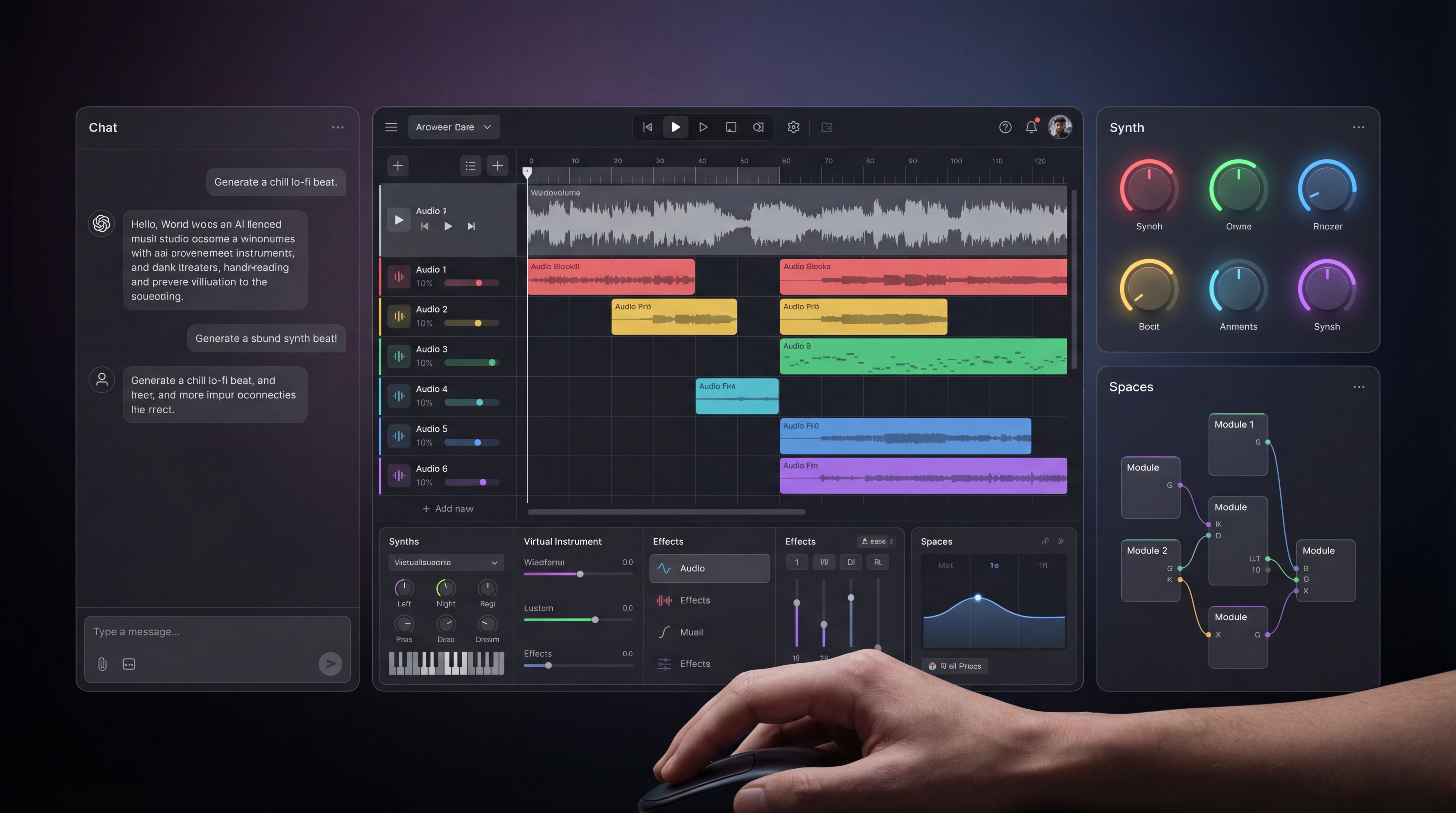
ProducerAI is a browser-based music creation experience built around a chat-driven workflow. Instead of “generate once and hope,” you give it a musical brief and then iterate with notes like you would with a human producer: shorten the intro, make the chorus lift harder, tighten the kick, brighten the vocal, add a bridge drop, and so on.
One feature that sets ProducerAI apart is Spaces—a way to “vibe-code” shareable mini music apps (custom instruments, effects, sequencers, modular environments) with natural language. In other words, ProducerAI can be both a music generator and a lightweight playground for building the tools you wish you had.
Why an “AI music agent” feels different than a normal generator
A normal generator optimizes for a single output. An agent workflow optimizes for direction and refinement.
That difference matters because most “finished” music is a stack of decisions:
- Composition: melody, harmony, rhythm, hook
- Arrangement: where the energy rises/falls, where the hook lands
- Sound: tone choices, drum weight, bass pocket, synth character
- Mix: vocal placement, clarity, width, low-end control
ProducerAI’s core promise is: you can make those decisions conversationally, without needing to be fluent in a DAW.
Quick Start: Your first track in ProducerAI (a 5-minute workflow)
Step 1: Write a one-paragraph “creative brief”
The best prompts aren’t long—they’re specific. Aim for 5–7 sentences that cover:
- Genre + subgenre
- Tempo/BPM (or “slow/medium/fast”)
- Mood (3 adjectives)
- Instrumentation anchors (drums, bass, main lead)
- Structure (intro/verse/chorus/bridge)
- Vocal choice (instrumental or vocal style)
- 1–2 hard “don’ts” (avoid EDM drop, avoid trap hats, avoid auto-tune, etc.)
Copy/paste prompt template:
Create a [genre/subgenre] track around [BPM]. Mood: [adjective, adjective, adjective]. Core instruments: [drums], [bass], [lead], [pads/texture]. Structure: Intro (4 bars) → Verse → Chorus → Verse → Chorus → Bridge → Final Chorus → Outro. Vocals: [instrumental / vocal style]. Hook: [one sentence describing the chorus hook]. Mix direction: [e.g., punchy low end, crisp highs, wide chorus]. Avoid: [two things].
Step 2: Ask for structure first, sound second
If you’re not sure what to do next, don’t jump straight to “make it better.” Ask for an arrangement plan:
- Where does the hook first appear?
- How does the chorus lift compared to the verse?
- What changes on the second chorus?
Once the structure feels right, then you refine tone and mix.
Step 3: Iterate with producer-style notes
Use short, actionable directions:
- “Shorten intro to 2 bars and bring the hook in earlier.”
- “Make the chorus wider and brighter; keep verses tighter and drier.”
- “Tighten the kick transient, clean the sub, reduce muddiness.”
- “Add a bridge drop: drums out, pads + vocal, then slam back.”
The complete ProducerAI creation guide (Idea → share-ready track)
Phase A: Choose your lane (and commit to constraints)
Most frustration comes from changing goals mid-way. Decide which of these you’re making:
- Instrumental (beats, soundtrack, ambient)
- Vocal song (lyrics + topline)
- Short-form cue (ads, intros, stingers)
Then lock 2–3 constraints:
- BPM range (e.g., 92–100 lofi; 120–130 house; 160+ drum & bass)
- Emotional palette (e.g., melancholic but hopeful)
- Sonic aesthetic (warm analog vs crisp digital)
Constraints don’t limit creativity—they increase consistency.
Phase B: Build Draft 1 (focus on hook + groove)
Draft 1 should answer only two questions:
- Does it have a groove you’d loop?
- Does it have a hook you can remember?
If you’re making vocals, don’t chase perfect lyrics first. Ask for:
- A simple chorus hook line
- A verse concept (what the verse “does”)
- A bridge contrast (what changes emotionally)
If you’re instrumental, ask for:
- A main motif (a melody or rhythmic riff)
- A supporting texture (pads, ambience)
- A variation plan (how it evolves across sections)
Phase C: Do three “producer passes” (arrangement, sound, mix)
Think of this like a checklist.
Pass 1: Arrangement pass (energy and timing)
Ask questions like:
- “Can the chorus hit earlier?”
- “Can we add a pre-chorus lift?”
- “Can we drop elements in verse 2 for contrast?”
- “Can we add a final chorus switch-up (extra harmony or counter-melody)?”
Practical moves that often improve a track immediately:
- Shorter intro
- Hook appears earlier
- Pre-chorus tension (riser, harmonic shift, drum change)
- Bridge drop + return
Pass 2: Sound design pass (tone and identity)
Now you choose “who the track is.”
- “Make the lead warmer, less brittle.”
- “Give the bass more character—slight saturation, clearer sub.”
- “Swap to tighter drums; less roomy, more punch.”
- “Add a signature ear-candy element every 8 bars.”
If you want the track to sound original without copying artists, describe a scene:
- “Like walking through neon rain in a quiet city.”
- “Like a boss battle that never fully resolves.”
- “Like sunrise after a long train ride.”
Scenes translate into sound choices more reliably than “style of X.”
Pass 3: Mix pass (clarity and translation)
You don’t need advanced mixing vocabulary to get better results. Use these plain-language targets:
- Clarity: “Less muddy; separate bass and kick; vocals clearer.”
- Punch: “More transient bite; tighter drums; controlled low end.”
- Width: “Wider chorus; keep verse centered; add subtle stereo interest.”
- Space: “Shorter reverb in verse; longer tail on chorus throws.”
A helpful final note is “make it translate.” That means it should still work on phone speakers, laptop speakers, and headphones.
Phase D: Export, stems, and finishing touches
If you plan to polish in a DAW, use stem exports when available, then:
- Trim start/end for a clean intro/outro
- Check levels (avoid clipping)
- Do a gentle finishing chain (light EQ → light compression → limiter)
If you’re staying in-browser, your goal is still the same: a clean start, a confident hook, and a controlled low end.
Phase E: Publishing responsibly
AI music distribution rules vary by platform. The safest general practice is to avoid prompts that explicitly imitate living artists, and to label your work honestly if a platform requires disclosure.
Spaces: the “vibe-code” feature (custom instruments & effects)
Spaces are ProducerAI’s creative multiplier. Instead of only generating songs, you can create a small tool that fits your workflow.
Three Space ideas anyone can use
- Hook Builder Keyboard
- Scale lock (e.g., A minor)
- Chord mode (single key triggers chords)
- “Tension” knob (adds passing tones)
- Vocal Throw Button
- A single button for reverb/delay throws
- Tempo-synced delay
- Ducking so the throw doesn’t bury the vocal
- 16-Step Drum Sequencer
- Swing control
- Probability per step
- Pattern save/load
How to prompt a Space (high success format)
Use this order:
- Purpose: “Build a vocal FX rack”
- Controls: knobs, buttons, XY pad
- Sound engine: saturation, delay, reverb, filtering
- Constraints: tempo sync, limiter on/off
- Presets: clean, wide, gritty
This keeps the result usable instead of chaotic.
When ProducerAI is the best choice
ProducerAI shines when you want:
- A collaborative, iterative workflow (direction, revision, polish)
- Fast experimentation across genres and arrangements
- A creative sandbox for custom tools (Spaces)
If you mainly want one-click songs with minimal back-and-forth, you might prefer a simpler generator.
Best alternatives (including MusicMaker AI)
If ProducerAI isn’t available to you, or if you want a faster “generate variations” workflow, here are strong options.
MusicMaker AI (recommended)
For a clean, straightforward alternative, try MusicMaker AI Song Generator. It’s a practical choice when you want quick drafts, rapid variations, or an easy way to test multiple directions before committing.
Other notable tools
- Suno: popular for quick full songs and fast iteration.
- Udio: another major platform for text-to-music and sharing.
- SOUNDRAW: useful if you want royalty-friendly tracks with customization controls.
- Boomy: beginner-friendly, fast creation and publishing workflows.
- AIVA: strong for composition-oriented creation and structured musical outputs.
A simple workflow that many creators like is: generate 2–3 drafts in one tool, then refine the best version in your preferred environment.
A simple recipe for consistently better results
If you only remember one process, use this:
- Brief (one paragraph with constraints)
- Structure (hook timing + energy curve)
- Three passes (arrangement → sound → mix)
- Export/finish (trim, levels, loudness)
ProducerAI makes that recipe feel natural because it’s designed for “notes and revisions,” not just single-shot prompts. And if you want a fast alternative for generating draft after draft, keep MusicMaker AI Song Generator in your toolkit as a reliable second opinion.